

Introduction
Cost Saving Is a Design Strategy, Not a
Material Choice
Most people think saving cost means using cheaper materials. That approach usually leads to:
- Higher maintenance costs
- Poor durability
- Reduced property value
True cost efficiency comes from intelligent planning, optimized geometry, and performance-driven decisions.
Understand Where Costs Actually Come From
Major Cost Drivers:
- Structure (foundation, columns, slabs)
- Finishes (flooring, paint, fixtures)
- Services (electrical, plumbing)
Insight:
Structure and geometry decisions made early have the biggest cost impact.
Optimize Residential Building Form and Geometry
Problem:
Complex shapes increase:
- Structural complexity
- Material waste
- Construction time
Strategy:
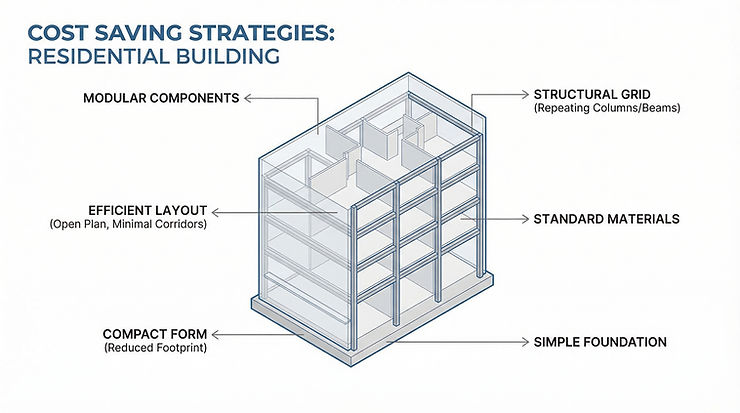
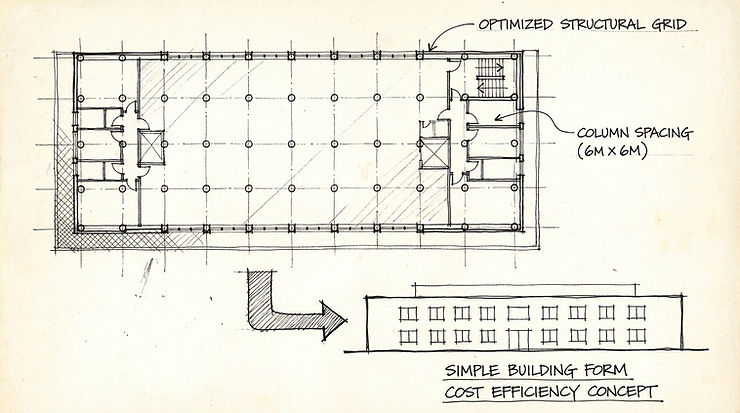
- Use simple, compact forms (rectangular or square)
- Minimize unnecessary projections and corners
Result:
Lower structural cost and faster construction.

Efficient Space Planning
Problem:
Poor layouts create wasted spaces like oversized corridors.
Strategy:
- Reduce circulation areas
- Use multi-functional spaces
- Design compact but efficient rooms
Insight:
Every unused square meter is wasted money.
Structural Grid Optimization
Strategy:
- Use regular column spacing
- Align walls with structural grid
- Avoid irregular spans
Result:
- Reduced material usage
- Simplified construction process
Smart Material Selection (Not Just Cheap Materials)
Strategy:
- Use locally available materials
- Balance cost with durability
- Reduce unnecessary finishes
Critical Insight:
Cheap materials often increase lifecycle cost due to maintenance.
Reduce Heat Gain to Save Operational Costs
Strategy:
- Optimize orientation
- Add shading devices
- Improve ventilation
Result:
Lower energy bills over the building’s lifetime.
Standardization and Modular Design
Strategy:
- Use standard sizes for doors, windows, and components
- Design with modular dimensions
Result:
- Reduced material waste
- Faster construction
- Lower labor cost
Minimize Structural Overdesign
Problem:
Oversized beams and columns increase cost unnecessarily.
Strategy:
- Coordinate closely with structural engineer
- Optimize member sizes
Phase-Wise Construction Planning
Strategy:
- Design for future expansion
- Build essential areas first
Benefit:
Reduces initial financial burden while allowing future growth.
Avoid Over-designing Interiors
Problem:
Excessive finishes and decoration inflate cost.
Strategy:
- Keep interiors simple and functional
- Focus on quality over quantity
Common Costly Mistakes to Avoid
- Frequent design changes during construction
- Poor coordination between architect and engineer
- Ignoring site conditions
- Choosing aesthetics over practicality
Advanced Cost Optimization Strategies
Integrated Design Approach
Architect + engineer collaboration from the beginning
Passive Design Integration
Reduces long-term energy costs
Value Engineering
Evaluate alternatives for cost vs performance
Conclusion
Cost-saving in residential building design is not about cutting corners. It is about:
- Smart planning
- Efficient geometry
- Material intelligence
- Lifecycle thinking
When done correctly, it results in a home that is affordable, durable, and high-performing. Whether you’re planning a new home or optimizing an existing design, Graphite can help you reduce costs, improve performance, and make smarter architectural decisions from the start.
Reach out to Graphite to explore how your project can be designed better, built smarter, and perform efficiently over time. Fill out the form here